
So you’ve heard all the buzz about the Mediterranean diet. You know it’s been named the best overall diet by health experts year after year. You’ve read about the heart benefits, the brain benefits, the longevity benefits. You’ve seen the gorgeous food photos. And you’re thinking, okay, I’m in. But where do I actually start?
Right here. That’s where.
The biggest challenge with any new eating pattern isn’t motivation, it’s logistics. You’re excited about the idea, but then Monday morning hits, and you’re standing in your kitchen, wondering what to actually make. That’s exactly why having a concrete meal plan is so valuable. It takes the guesswork out of your week and lets you focus on the good part, eating incredibly delicious food.
This 7-day Mediterranean diet meal plan is designed to be realistic, balanced, and genuinely enjoyable. Every meal uses whole, fresh ingredients. Nothing is overly complicated or time-consuming. And most importantly, nothing feels like deprivation because the Mediterranean diet isn’t about restriction. It’s about abundance.
Day 1: Monday
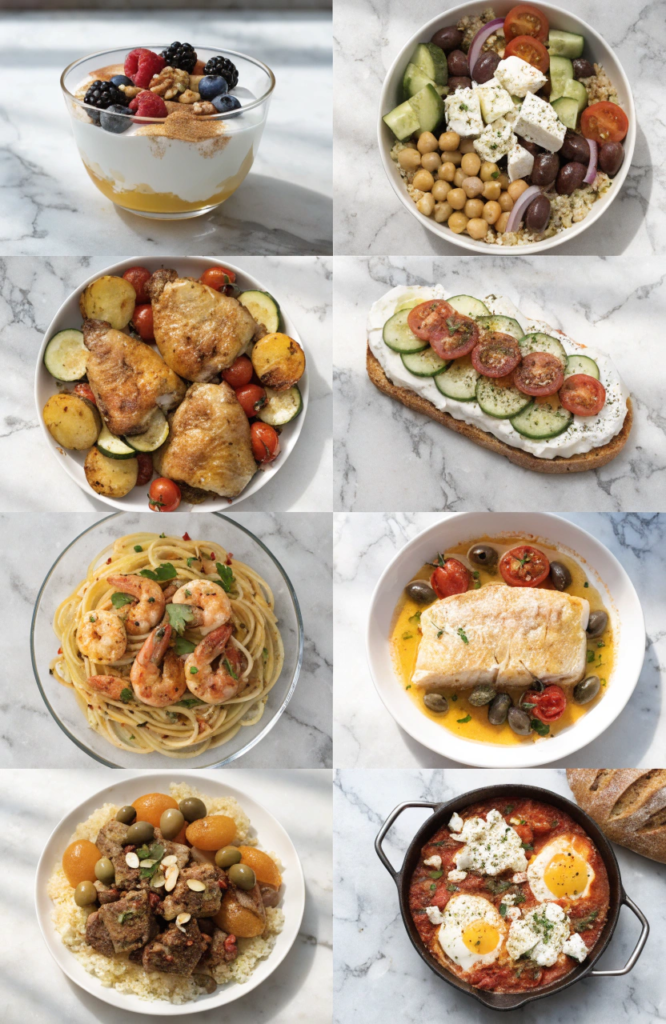
Breakfast: Greek yogurt parfait with honey, chopped walnuts, fresh berries, and a sprinkle of cinnamon. This takes three minutes and keeps you full until lunch.
Lunch: Mediterranean quinoa bowl with chickpeas, cucumber, cherry tomatoes, Kalamata olives, red onion, and crumbled feta. Dress with a simple lemon-olive oil vinaigrette.
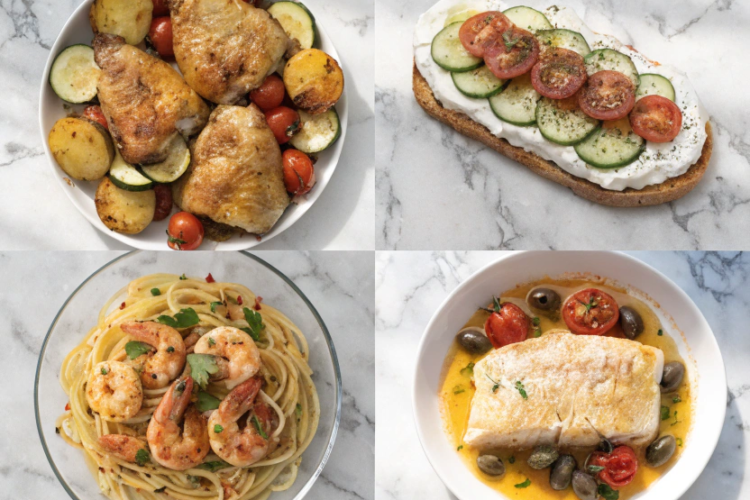
Dinner: One-pan lemon herb chicken thighs roasted with baby potatoes, zucchini, and cherry tomatoes. Drizzle everything generously with olive oil and serve with crusty whole-grain bread.
Snack: A handful of almonds and a fresh orange.
Day 2: Tuesday
Breakfast: Labneh toast spread thick labneh on whole grain sourdough, top with sliced cucumber, cherry tomatoes, a drizzle of olive oil, and a generous sprinkle of za’atar.
Lunch: Tuscan white bean soup with spinach, carrots, celery, and a Parmesan rind for depth. Make a big batch; you’ll want leftovers.
Dinner: Spaghetti aglio e olio with shrimp, garlic, olive oil, red pepper flakes, and perfectly seared shrimp tossed with al dente pasta and fresh parsley.
Snack: Hummus with carrot sticks and whole wheat pita triangles.
Day 3: Wednesday
Breakfast: Menemen Turkish scrambled eggs cooked slowly in a sauce of sautéed tomatoes, green peppers, and warm spices. Serve with crusty bread for scooping.
Lunch: Mediterranean tuna salad lettuce cup,s good-quality tuna mixed with olive oil, lemon juice, cherry tomatoes, cucumber, capers, olives, and fresh parsley, served in crisp butter lettuce leaves.
Dinner: Baked cod with Kalamata olives, capers, burst cherry tomatoes, and white wine. Serve with a side of roasted sweet potatoes and a simple green salad.
Snack: Sliced apple with a tablespoon of almond butter.
Day 4: Thursday
Breakfast: Overnight chia pudding made with almond milk, honey, and a touch of orange blossom water. Top with crushed pistachios, fresh figs or berries, and a drizzle of honey.
Lunch: Grilled halloumi and roasted vegetable pita pockets with hummus and arugula. Warm, satisfying, and ready in 15 minutes.
Dinner: Chicken souvlaki with Greek rice pilaf and tzatziki sauce. Serve with warm pita, sliced tomatoes, and cucumber.
Snack: A small handful of mixed olives and a piece of aged cheese.
Day 5: Friday
Breakfast: Savory oatmeal cooked in broth, topped with a poached egg, crumbled feta, cherry tomatoes, za’atar, and a generous drizzle of olive oil.
Lunch: Fattoush salad with crispy pita chips, romaine, tomatoes, cucumber, radishes, fresh herbs, and a sumac-lemon dressing. Add leftover chicken or chickpeas for protein.
Dinner: Greek baked fish (plaki), white fish fillets baked in a rustic sauce of tomatoes, onions, garlic, and plenty of olive oil. Serve with crusty bread for soaking up the sauce.
Snack: Greek yogurt with a spoonful of honey and a few walnuts.
Day 6: Saturday
Breakfast: Full Mediterranean breakfast spread, a leisurely weekend affair with soft-boiled eggs, sliced feta, olives, cucumber, tomatoes, hummus, warm pita bread, honey, and strong coffee or tea.
Lunch: Lemon orzo salad with roasted vegetables, fresh herbs, pine nuts, and a bright lemon dressing. Serve at room temperature.
Dinner: Slow-cooked Moroccan lamb tagine with dried apricots, green olives, and warm spices. Serve over fluffy couscous with fresh cilantro and toasted almonds.
Snack: Muhammara (roasted red pepper and walnut dip) with vegetable crudités.
Day 7: Sunday
Breakfast: Shakshuka eggs poached in a spiced tomato sauce with crumbled feta and fresh herbs. Serve straight from the skillet with crusty bread for the whole family.
Lunch: Mediterranean mezze plate, hummus, baba ganoush, tabbouleh, marinated artichoke hearts, olives, stuffed grape leaves, pickled vegetables, and warm pita bread.
Dinner: Roasted cauliflower steaks with Romesco sauce, warm white beans, and a simple arugula salad dressed with lemon and olive oil.
Snack: Fresh seasonal fruit with a small square of dark chocolate.
Meal Plan Tips for Success
Shop once, eat all week. Take 30 minutes on Sunday to review the plan, write your grocery list, and do one focused shopping trip. Most Mediterranean staples, such as olive oil, canned beans, olives, capers, and whole grains, keep for months, so your pantry will build naturally over time.
Prep strategically. Spend an hour on Sunday washing greens, chopping vegetables, cooking a batch of grains, boiling eggs, and making one or two dressings or sauces. This small investment of time pays enormous dividends throughout the week.
Embrace leftovers. The Tuscan white bean soup from Tuesday’s lunch? Make extra and eat it on Wednesday. The chicken souvlaki from Thursday? The leftovers are tomorrow’s salad protein. Mediterranean food almost always tastes better the next day.
Don’t stress about perfection. This plan is a framework, not a rulebook. Swap meals between days. Substitute whatever vegetables look freshest at the store. Use canned chickpeas when you don’t feel like cooking dried ones. The Mediterranean diet is forgiving by nature; it’s about patterns, not precision.
Stay hydrated. Water is your primary beverage. Herbal tea and coffee are enjoyed regularly throughout the Mediterranean. Red wine in moderation with dinner is part of the tradition if you choose to include it.
The Bottom Line
The Mediterranean diet works because it doesn’t feel like a diet. It feels like eating really, really well. This meal plan proves that every single meal,l from a three-minute yogurt parfait to a slow-simmered lamb tagine,ne can be nourishing, flavorful, and genuinely satisfying.
Start with one week. Follow this plan, adjust it to your tastes, and pay attention to how you feel. More energy. Better digestion. Fewer cravings. And a genuine excitement about mealtime that you might not have felt in a long time.
That’s the Mediterranean way. And it’s waiting for you.