For most of us, breakfast falls into one of two categories. Category one: you skip it entirely, telling yourself you’re not hungry, and then you’re absolutely ravenous by 10 am and eating whatever you can find. Category two: you eat the same thing every single day the same bowl of cereal, the same slice of toast, the same smoothie not because you love it, but because you’ve run out of imagination before you’ve even had your coffee.
Neither of these is serving you. And neither of them sounds particularly joyful.
Now let me paint you a different picture. Imagine waking up to the smell of warm spiced eggs bubbling in a skillet. Or sitting down to a bowl of thick, creamy yogurt drizzled with dark honey and scattered with pistachios. Or spreading silky, tangy labneh on warm toast and piling it with ripe tomatoes and fragrant herbs. Or pulling golden, cheesy pastry from the oven while your coffee brews.
That’s a Mediterranean morning. And it’s not just beautiful it’s scientifically, nutritionally, and culinarily the best way you can possibly start your day.
The Mediterranean diet has been extensively studied and consistently recognized as one of the most health-promoting eating patterns on the planet. Researchers have linked it to reduced risk of heart disease, better cognitive function, lower rates of depression, improved gut health, and longer life expectancy. And all of that starts with what you put on your plate in the morning.
But here’s the thing none of that matters if the food doesn’t taste incredible. And Mediterranean breakfast food? It tastes incredible. Full stop.
Now you might be thinking didn’t we already cover Mediterranean breakfasts? We did touch on some favorites earlier. But the Mediterranean world is vast and gloriously varied, stretching from the sun-baked coastlines of Morocco to the olive-covered hillsides of Greece, from the bustling souks of Istanbul to the terraced vineyards of southern Italy. There are so many more beautiful, delicious breakfast ideas to explore. So consider this the expanded edition 17 recipes and ideas that go deeper, wider, and even more delicious than before.
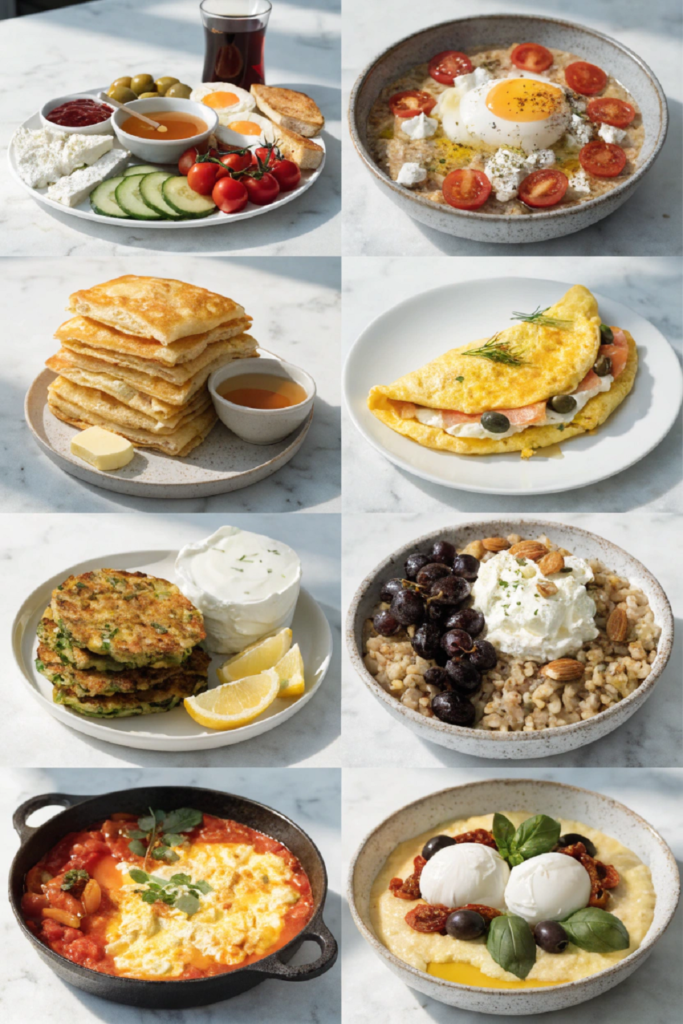
1. Full Turkish Breakfast Spread (Kahvaltı)
If you’ve never experienced a proper Turkish breakfast, I need you to stop everything and pay attention. The Turkish kahvaltı which literally translates to “before coffee” is arguably the greatest breakfast culture in the entire world. It’s not a meal. It’s an event. A leisurely, abundant, beautiful spread that can last for hours and includes somewhere between 15 and 25 different small dishes.
Turkish people take their breakfast so seriously that there are entire restaurants in Istanbul dedicated solely to serving kahvaltı. And once you sit down to one, you’ll completely understand why.
Now I’m not suggesting you produce 20 dishes on a weekday morning. But even a simplified version of the kahvaltı spirit can completely transform your breakfast experience. Here’s how to build one at home.
The Essential Components:
Cheeses:
- Beyaz peynir (white cheese, similar to feta but milder), slice it thick
- Kaşar cheese (a firm, buttery cheese), cube or slice it
- String cheese or tulum (aged crumbled cheese)
- A small bowl of creamy labne
Eggs:
- Soft-boiled eggs (exactly 6 minutes for jammy yolks)
- Or menemen (see Recipe #6 for the full version)
Olives:
- A mix of green and black olives, some marinated with herbs and chili
Vegetables:
- Sliced cucumber
- Sliced ripe tomatoes with a pinch of salt
- Fresh green peppers
- Roasted or fresh red peppers
Bread:
- Warm, crusty white bread or whole-grain rolls
- Simit (sesame-crusted bread rings), if you can find them
Spreads and Extras:
- A small bowl of honey ideally honeycomb
- Good butter
- Rose hip jam or sour cherry jam
- Kaymak (clotted cream) is utterly luxurious
- Tahini mixed with pekmez (grape molasses) for dipping bread
Drinks:
- Strong black Turkish tea (çay) in small tulip-shaped glasses is non-negotiable
How to Build It:
Boil your eggs. Arrange everything else on your table in small plates and bowls. Brew the tea. Sit down. Take your time. This is the whole point.
The kahvaltı experience isn’t about rushing. It’s about grazing slowly through different flavors and textures, something salty, something creamy, something tangy, something sweet. It’s about refilling your tea glass three times. It’s about the conversation that happens when there’s no rush to clear the table and get on with the day.
Weekend ritual: Designate one morning per weekend as kahvaltı morning. Invite a friend or two. It requires almost no cooking, just thoughtful shopping and a little arrangement. It might just become the highlight of your week.
2. Savory Oatmeal with Olive Oil, Za’atar, and Poached Egg
Before you close this tab hear me out. Savory oatmeal sounds strange if you’ve only ever had oats with sugar and fruit. But oatmeal is just a neutral, creamy grain and neutral, creamy grains are the perfect canvas for savory Mediterranean flavors. This bowl is warm, deeply satisfying, and genuinely one of the most interesting breakfasts you’ll ever have.
What You’ll Need (serves 1):
- 1/2 cup rolled oats
- 1 cup water or low-sodium chicken broth (using broth instead of water is a game changer)
- 1/4 teaspoon salt
- 1 tablespoon extra virgin olive oil
- 1 teaspoon za’atar spice blend
- 1 egg, poached or soft-boiled
- 1/4 cup cherry tomatoes, halved
- 2 tablespoons crumbled feta cheese
- Fresh parsley or basil leaves
- Pinch of red pepper flakes
- Drizzle of your best olive oil to finish
- Optional: a few Kalamata olives, sliced cucumber, or a spoonful of hummus on the side
How to Make It:
Cook the oats in water or broth according to package directions. Season with salt while cooking. The broth adds a savory depth that immediately signals to your brain that this is not your typical sweet oatmeal.
While the oats cook, poach your egg. If poaching intimidates you bring a small pot of water to a gentle simmer, add a splash of white vinegar, create a gentle swirl with a spoon, crack the egg into a small cup and slide it into the center of the swirl. Cook for 3 minutes for a perfectly runny yolk.
Spoon the oatmeal into a bowl. Drizzle with olive oil and sprinkle za’atar generously on top. Arrange the cherry tomatoes and feta around the bowl. Place the poached egg in the center and break the yolk let it run into the oats like the most delicious sauce. Add red pepper flakes and fresh herbs.
Take one bite and tell me this isn’t extraordinary. I’ll wait.
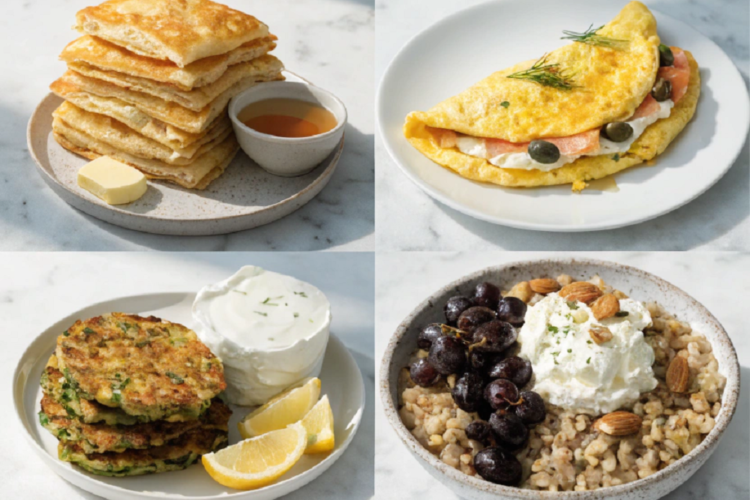
3. Moroccan Msemen (Flaky Square Pancakes)
Msemen are Moroccan pan-fried flatbreads that are layered and folded so they come out flaky, chewy, and slightly crispy at the edges somewhere between a crepe and a flaky pastry. Eaten warm with honey and butter, or argan oil, they are one of the great breakfast foods of the Mediterranean world. They take a little practice to fold correctly, but once you get the hang of it, you’ll make them constantly.
What You’ll Need (makes 8 msemen):
- 2 cups all-purpose flour
- 1/2 cup semolina flour, plus extra for working
- 1 teaspoon salt
- 1 teaspoon sugar
- 1 teaspoon instant yeast
- 3/4 cup warm water (approximately)
- 4 tablespoons unsalted butter, very soft
- 2 tablespoons vegetable oil, plus extra for working
- Extra semolina for sprinkling
For Serving:
- Good butter and honey
- Argan oil (if you can find it it has a beautiful nutty flavor)
- Amlou (Moroccan almond butter with honey and argan oil)
- Fresh mint tea
How to Make It:
In a large bowl, mix together the flour, semolina, salt, sugar, and yeast. Gradually add warm water, kneading until you have a smooth, elastic dough that’s not sticky about 8-10 minutes. It should feel soft and pliable. Cover and rest for 30 minutes.
Oil your hands and work surface generously. Divide the dough into 8 equal balls. Take one ball and flatten it into a thin circle. Spread a tiny bit of soft butter over the surface and sprinkle lightly with semolina. Fold the left third over the center, then fold the right third over (like a letter). Now fold the top third down and the bottom third up, creating a square. You’ve just made the layers. Gently flatten the square slightly with your palm. Repeat with remaining balls.
Heat a dry skillet or griddle over medium heat. Cook each msemen for 3-4 minutes per side, pressing gently with a spatula, until golden with slightly charred spots and flaky, crispy edges.
Serve immediately with butter, honey, and hot mint tea. The combination of flaky warm bread, rich butter, and dark honey is one of the most satisfying breakfasts you’ll ever have.
4. Smoked Salmon and Cream Cheese Egg White Omelette with Herbs
Light, protein-packed, and elegant enough for company this omelette is a Mediterranean coastal classic that feels luxurious without being heavy. Perfect for those mornings when you want something that feels special but won’t slow you down.
What You’ll Need (serves 2):
- 4 large egg whites (or 2 whole eggs plus 2 egg whites)
- 2 tablespoons water or milk
- Salt and white pepper to taste
- 1 tablespoon olive oil or butter
- 3 oz smoked salmon, roughly torn
- 3 tablespoons cream cheese or labneh, softened
- 2 tablespoons capers, drained
- 2 tablespoons red onion, very finely minced
- 1 tablespoon fresh chives, snipped
- 1 tablespoon fresh dill
- Lemon zest from 1/2 lemon
- Arugula or watercress for serving
How to Make It:
Whisk the egg whites (and whole eggs if using) with water, salt, and white pepper until light and slightly foamy.
Mix the cream cheese or labneh with lemon zest, half the chives, and half the dill until smooth. Set aside.
Heat olive oil or butter in a non-stick skillet over medium-low heat. Pour in the egg mixture and let it set around the edges. Using a spatula, gently push the cooked edges toward the center, tilting the pan to let the uncooked egg flow to the edges. When the surface is just barely set but still slightly glossy, reduce heat to low.
Dot small spoonfuls of the cream cheese mixture across one half of the omelette. Lay the smoked salmon over the cream cheese. Sprinkle with capers and red onion.
Fold the omelette in half over the fillings. Slide onto a plate and garnish with the remaining herbs. Serve alongside a handful of peppery arugula.
This is the breakfast you make when you’re trying to impress yourself. Highly recommended.
5. Zucchini and Herb Fritters (Kolokithokeftedes)
These Greek zucchini fritters are crispy on the outside, tender and herby on the inside, and absolutely addictive from the first bite. They’re a staple of Greek taverna menus, but they’re equally wonderful at the breakfast table. Serve them with a dollop of yogurt and some sliced tomatoes and you have one of the most satisfying Mediterranean breakfasts imaginable.
What You’ll Need (makes about 12 fritters):
- 3 medium zucchini, grated (about 3 cups)
- 1 teaspoon salt (for drawing out moisture)
- 1/2 cup crumbled feta cheese
- 1/4 cup fresh mint, finely chopped
- 1/4 cup fresh dill, finely chopped
- 1/4 cup fresh parsley, finely chopped
- 2 scallions, finely sliced
- 2 cloves garlic, minced
- 1 egg, beaten
- 1/2 cup all-purpose flour (or chickpea flour for a gluten-free version)
- 1/2 teaspoon baking powder
- Black pepper to taste
- Olive oil for frying
For Serving:
- Full-fat Greek yogurt
- Sliced ripe tomatoes
- Lemon wedges
- Extra fresh herbs
How to Make It:
Grate the zucchini and place it in a colander. Sprinkle with 1 teaspoon salt and toss to combine. Let it sit for at least 15 minutes it will release an astonishing amount of water. Then squeeze it with your hands or wrap it in a clean kitchen towel and wring it out with everything you’ve got. You want it as dry as possible. This is the most important step wet zucchini means soggy fritters.
In a large bowl, combine the squeezed zucchini with feta, all the fresh herbs, scallions, garlic, and egg. Mix well. Add the flour and baking powder and stir until a thick batter forms. Season generously with black pepper. Taste the feta should provide enough salt, but adjust if needed.
Heat a generous layer of olive oil in a large skillet over medium heat. Drop heaping tablespoons of batter into the oil and gently flatten into rounds. Cook for 3-4 minutes per side until deeply golden and crispy. Work in batches and don’t crowd the pan.
Drain briefly on paper towels. Serve hot with cool Greek yogurt, sliced tomatoes, and lemon wedges.
Meal prep note: These fritters reheat beautifully in the oven or air fryer. Make a big batch on the weekend and warm them up each morning throughout the week.
6. Warm Farro Breakfast Bowl with Roasted Grapes and Ricotta
Farro is an ancient grain that’s been nourishing people in the Mediterranean for literally thousands of years. It has a wonderful nutty, chewy texture and a slightly earthy flavor that works beautifully in both savory and sweet preparations. This warm breakfast bowl leans toward the sweeter side creamy ricotta, jammy roasted grapes, honey, and toasted almonds and it feels incredibly luxurious despite being genuinely wholesome.
What You’ll Need (serves 2):
- 1 cup semi-pearled farro, cooked (cook in water or apple juice for extra sweetness)
- 1 cup red or black grapes
- 1 tablespoon olive oil
- 1 tablespoon balsamic vinegar
- 1 tablespoon honey, plus more for drizzling
- 1/2 cup whole milk ricotta
- 1/4 cup toasted almonds, roughly chopped
- 1/4 teaspoon cinnamon
- Pinch of cardamom
- Fresh thyme or mint for garnish
- Optional: a square of dark chocolate, grated over the top
How to Make It:
Preheat your oven to 425°F. Toss the grapes with olive oil, balsamic vinegar, and a pinch of salt on a small baking sheet. Roast for 15-20 minutes until the grapes are slightly shriveled, jammy, and caramelized. They’ll burst and release their sweet juices. This is where the magic happens.
Warm the cooked farro in a small saucepan with a splash of water and a drizzle of honey. Stir in the cinnamon and cardamom.
Divide the warm farro between two bowls. Dollop the ricotta generously on top. Spoon the roasted grapes over everything, including any beautiful syrupy juices from the pan. Scatter the toasted almonds. Drizzle with more honey and add a few fresh thyme or mint leaves.
If you want to add the dark chocolate and I strongly suggest you do grate a small square over the top. It melts slightly into the warm farro and creates an extraordinary flavor combination.
7. Algerian Chakchouka (North African Spiced Egg Scramble)
Chakchouka sometimes spelled tchouktchouka is the North African cousin of shakshuka, and while the two dishes share a family resemblance, they have their own distinct personality. Where shakshuka involves eggs gently poached in a smooth tomato sauce, chakchouka is a more rustic, free-spirited scramble eggs mixed directly into a chunky, spiced vegetable medley. It’s messier, heartier, and in many ways even more satisfying.
What You’ll Need (serves 2):
- 3 tablespoons olive oil
- 1 onion, diced
- 1 green bell pepper, diced
- 1 red bell pepper, diced
- 2 ripe tomatoes, diced
- 3 cloves garlic, minced
- 1 tablespoon harissa paste (adjust to your heat tolerance)
- 1 teaspoon cumin
- 1 teaspoon caraway seeds (distinctive and wonderful don’t skip if you can find them)
- 1/2 teaspoon turmeric
- 1/2 teaspoon paprika
- Salt and pepper to taste
- 4 large eggs
- Fresh cilantro and parsley
- Warm crusty bread for serving
- Optional: a spoonful of yogurt on the side to cool things down
How to Make It:
Heat olive oil in a wide skillet over medium heat. Sauté the onion and both peppers for 8-10 minutes until completely soft and beginning to caramelize. Add the garlic and cook for another minute. Add the harissa, cumin, caraway seeds, turmeric, and paprika. Stir for 1 minute until everything is fragrant and deep red.
Add the diced tomatoes and cook for 5-8 minutes, stirring occasionally, until the tomatoes break down and the whole mixture becomes thick, jammy, and concentrated.
Season with salt and pepper, then crack the eggs directly into the pan. Unlike shakshuka, you’re going to stir these in. Using a spatula or wooden spoon, gently scramble everything together fold the eggs into the vegetable mixture in slow, deliberate movements over low heat. Stop when the eggs are just set but still creamy and glossy.
Scatter fresh herbs over the top and serve immediately with plenty of bread.
The caraway seeds are what really set this apart they have a warm, slightly licorice-like flavor that’s deeply characteristic of North African cooking. Once you taste it, you’ll understand why.
8. Creamy Polenta with Sun-Dried Tomatoes, Olives, and Poached Eggs
In northern Italy and other parts of the Mediterranean, polenta is as fundamental as bread. Cooked low and slow until it’s silky and creamy, it’s one of the most comforting breakfast bases imaginable. Top it with intensely flavored sun-dried tomatoes, salty olives, fresh herbs, and a perfectly poached egg, and you have a breakfast that is genuinely restaurant-worthy.
What You’ll Need (serves 2):
- 1/2 cup stone-ground cornmeal or polenta (not instant)
- 2 cups water
- 1/2 cup whole milk
- 1 tablespoon butter
- 2 tablespoons grated Parmesan
- Salt to taste
For the Toppings:
- 2-4 large eggs, poached
- 1/4 cup sun-dried tomatoes in oil, roughly chopped
- 1/4 cup Castelvetrano or Kalamata olives, halved
- 2 tablespoons capers
- 2 cloves garlic, thinly sliced and sautéed in olive oil until golden
- 1/4 cup fresh basil, torn
- Red pepper flakes
- Drizzle of the oil from the sun-dried tomato jar (this is liquid gold use it)
- Extra Parmesan for finishing
How to Make It:
Bring the water and milk to a gentle boil in a medium saucepan. Season well with salt. Slowly whisk in the polenta in a thin, steady stream this prevents lumps. Reduce heat to the lowest possible setting and cook, stirring frequently, for 20-25 minutes. Good polenta takes time. The mixture should become very thick, creamy, and pull away from the sides of the pan. Stir in the butter and Parmesan at the end.
While the polenta cooks, sauté the garlic in olive oil until golden. Poach your eggs to your preferred doneness.
Spoon the creamy polenta into shallow bowls. Arrange the sun-dried tomatoes, olives, capers, and golden garlic slices on top. Place a poached egg (or two) in the center. Drizzle with sun-dried tomato oil. Scatter fresh basil and red pepper flakes. Finish with extra Parmesan.
When you break that yolk and it runs into the creamy polenta that’s the moment. That’s why we’re here.
9. Mediterranean Avocado and Feta Egg Scramble
We’re taking your basic scrambled eggs and giving them the full Mediterranean treatment. Creamy avocado, salty crumbled feta, bright herbs, and a squeeze of lemon transform a simple scramble into something that feels entirely new. Ready in 10 minutes. Absolutely no excuses.
What You’ll Need (serves 2):
- 4 large eggs
- 2 tablespoons milk or cream
- Salt and pepper
- 1 tablespoon olive oil or butter
- 1 ripe avocado, diced
- 1/3 cup crumbled feta cheese
- 1/4 cup cherry tomatoes, halved
- 2 tablespoons fresh chives or scallions, snipped
- 2 tablespoons fresh basil, torn
- Squeeze of lemon juice
- Pinch of red pepper flakes
- Toasted whole grain bread for serving
How to Make It:
Whisk the eggs with milk, a pinch of salt, and plenty of black pepper. Heat olive oil or butter in a non-stick skillet over medium-low heat. Pour in the eggs.
Here’s the key to perfect scrambled eggs: cook them slowly. Use a silicone spatula to gently push and fold the eggs in slow, deliberate strokes. Don’t rush, don’t stir constantly just fold every 20 seconds or so. Remove from heat while they’re still slightly underdone and creamy. They’ll finish cooking from the residual heat of the pan.
Gently fold in the diced avocado, cherry tomatoes, and half the feta. The avocado will warm slightly and become incredibly creamy against the soft eggs.
Transfer to plates and top with the remaining feta, fresh herbs, a squeeze of lemon, and red pepper flakes. Serve with toasted bread.
The secret here is restraint in the cooking and in the mixing. Gentle folds, low heat, and stopping before you think they’re done is how you get silky, creamy eggs that haven’t a trace of rubberiness.
10. Cypriot Halloumi and Watermelon Breakfast Plate
This combination sounds unusual until you try it, at which point you’ll wonder how you’ve been eating watermelon without halloumi your entire life. The salty, squeaky, golden-grilled cheese against the ice-cold, sweet, juicy watermelon is one of those flavor contrasts that just makes complete and total sense. In Cyprus, where halloumi originates, this pairing is a beloved summer morning tradition.
What You’ll Need (serves 2):
- 8 oz halloumi cheese, sliced into 1/3-inch planks
- 4 thick slices seedless watermelon
- 1 tablespoon olive oil
- Fresh mint leaves, roughly torn
- 1 tablespoon fresh lime or lemon juice
- 1 tablespoon honey (optional)
- Pinch of chili flakes (optional but wonderful)
- Black pepper
- A handful of arugula or watercress (optional, for serving)
- Toasted seeds pumpkin or sesame
How to Make It:
Heat a grill pan or skillet over medium-high heat. Brush lightly with olive oil. Place the halloumi slices in the pan and cook for 2-3 minutes per side without moving them. You want a deep golden crust the kind that crackles slightly when you press it.
While the halloumi grills, arrange the watermelon slices on a plate. If using arugula, make a bed of it underneath the watermelon.
Place the hot halloumi slices directly onto or alongside the watermelon. Scatter torn mint leaves generously. Squeeze lime or lemon juice over everything. Drizzle with honey and sprinkle with chili flakes if using. Add black pepper and toasted seeds.
Eat immediately the contrast between hot, salty cheese and cold, sweet fruit is most dramatic when the halloumi is fresh from the pan.
This plate is stunning. It photographs beautifully. It tastes even better than it looks. And it takes about seven minutes to make.
11. Baked Oatmeal with Figs, Walnuts, and Orange Blossom
This is the make-ahead breakfast that changes everything. You spend 10 minutes putting it together, slide it into the oven, and an hour later you have something that tastes like dessert but is packed with fiber, protein, and all kinds of things your body loves. Make it on Sunday and reheat portions all week.
Figs are one of the most ancient and beloved foods in Mediterranean culture they’ve been cultivated around the Mediterranean Sea for over 11,000 years. Combined with walnuts (another Mediterranean staple), warm cinnamon, and the delicate floral note of orange blossom water, this baked oatmeal is something genuinely special.
What You’ll Need (serves 6):
- 2 cups rolled oats
- 1/3 cup walnuts, roughly chopped
- 1/4 cup pumpkin seeds
- 1 1/2 teaspoons baking powder
- 1 1/2 teaspoons cinnamon
- 1/4 teaspoon cardamom
- 1/4 teaspoon nutmeg
- Pinch of salt
- 2 cups whole milk (or oat milk)
- 2 large eggs
- 3 tablespoons honey or maple syrup
- 2 tablespoons olive oil
- 1 teaspoon vanilla extract
- 1/2 teaspoon orange blossom water
- 8 fresh or dried figs, halved (or a mix of fresh figs and dried apricots)
- Zest of 1 orange
For Serving:
- Warm milk or cream for pouring
- Extra honey
- Greek yogurt
- A few extra fig halves
How to Make It:
Preheat your oven to 375°F and lightly grease an 8×8 inch or similar baking dish with olive oil or butter.
In a large bowl, combine the oats, walnuts, pumpkin seeds, baking powder, cinnamon, cardamom, nutmeg, and salt. In a separate bowl, whisk together the milk, eggs, honey, olive oil, vanilla, orange blossom water, and orange zest.
Pour the wet ingredients into the dry and stir to combine. Pour into the prepared baking dish. Arrange the fig halves on top, pressing them gently into the oat mixture. Drizzle a little extra honey over the top.
Bake for 35-40 minutes until the top is golden and the center is set it should have just a slight jiggle when you shake the pan.
Serve warm, scooped into bowls, with a pour of warm milk, a dollop of Greek yogurt, and an extra drizzle of honey.
The orange blossom water is what makes this extraordinary rather than ordinary. It’s a subtle, floral, unmistakably Mediterranean note that elevates everything around it.
12. Sicilian Orange and Almond Breakfast Cake
In Sicily, it’s perfectly normal encouraged, even to eat a slice of cake for breakfast. Not a thick, frosted layer cake. Something lighter, more delicate. Dense with ground almonds, bright with orange, damp and fragrant and satisfying in the way that only something properly made can be.
This cake is gluten-free, naturally sweetened, and keeps beautifully for a week. Slice it thin, pair it with a strong espresso or a cup of mint tea, and call it a Sicilian morning.
What You’ll Need (makes one 9-inch cake, serves 10-12):
- 2 large navel oranges
- 3 cups almond flour (or ground almonds)
- 1 cup sugar (or 3/4 cup honey)
- 6 large eggs
- 1 teaspoon baking powder
- 1/2 teaspoon almond extract
- Pinch of salt
- Powdered sugar for dusting
- Optional: 1/4 cup sliced almonds for the top, 1 tablespoon orange blossom water
How to Make It:
This recipe begins with a step that seems strange but is utterly brilliant: you boil the whole oranges. Put both oranges in a pot, cover with water, bring to a boil, and simmer for 2 hours until completely soft. (Or use a pressure cooker 30 minutes on high pressure.) Drain, cool slightly, then cut in half and remove any seeds. Put the whole oranges skin, pith, flesh and all into a food processor and blend until completely smooth. This orange puree is the foundation of the cake.
Preheat oven to 350°F. Grease and line a 9-inch springform pan.
Beat the eggs and sugar together until pale and slightly thickened. Stir in the orange puree, almond flour, baking powder, almond extract, orange blossom water if using, and salt. Mix until smooth. The batter will be quite wet this is correct.
Pour into the prepared pan. Scatter sliced almonds on top if using. Bake for 50-60 minutes, until a toothpick inserted in the center comes out clean and the top is deep golden. If the top browns too quickly, cover loosely with foil.
Cool in the pan for 20 minutes before releasing. Dust generously with powdered sugar.
Eat a thin slice with coffee and feel immediately Sicilian. You’re welcome.
13. Lebanese Kaak (Street Sesame Cookies)
Kaak are Lebanese street bread-cookies sold by vendors on every corner in Beirut from large wicker baskets, calling out to the morning crowd. They’re slightly sweet, subtly spiced with mahlab and anise, and encrusted in sesame seeds. They’re not really a cookie in the Western sense they’re more like a cross between a bread ring and a cracker. They’re perfect for dipping in sweet tea, spreading with labneh, or just eating on their own.
What You’ll Need (makes about 20 kaak):
- 3 cups all-purpose flour
- 1/2 cup sesame seeds, plus extra for rolling
- 1/4 cup sugar
- 1 teaspoon instant yeast
- 1/2 teaspoon salt
- 1/2 teaspoon ground anise or anise seeds
- 1/4 teaspoon mahlab (ground cherry pits find at Middle Eastern stores, totally worth it)
- 1/4 teaspoon cinnamon
- 1/4 cup olive oil
- 1/2 cup warm milk
- 1/4 cup warm water (approximately)
- 1 egg yolk mixed with 1 tablespoon water (egg wash)
How to Make It:
Combine flour, sesame seeds, sugar, yeast, salt, and all the spices in a large bowl. Add the olive oil and work it into the flour with your fingers until it resembles coarse crumbs. Add the warm milk gradually, mixing until a smooth, slightly firm dough comes together. Add warm water as needed. Knead for 5-6 minutes. Cover and let rest for 1 hour.
Preheat oven to 350°F. Line two baking sheets with parchment.
Pull off golf ball-sized pieces of dough. Roll each piece into a long rope about 6-7 inches long. Press the ends together to form an oval ring. Brush with egg wash and roll in extra sesame seeds, pressing gently so they adhere. Arrange on the baking sheets.
Bake for 20-25 minutes until golden. Cool on a rack.
Store in an airtight container they keep for up to two weeks and actually improve in flavor as they sit. Dip them in your morning tea and think of Beirut.
14. Tunisian Lablabi (Spiced Chickpea Breakfast Soup)
In Tunisia, lablabi is a breakfast institution. The morning hours are when chickpea soup vendors do their busiest trade, ladling steaming bowls into deep earthenware bowls that are already lined with torn stale bread and raw egg. It’s hearty, warming, aggressively spiced, and endlessly customizable. It sounds unusual for breakfast and it is. That’s exactly why you should try it.
What You’ll Need (serves 4):
- 2 cans (15 oz each) chickpeas, drained and rinsed
- 4 tablespoons olive oil, divided
- 5 cloves garlic, minced
- 2 tablespoons harissa paste (more or less to taste)
- 2 teaspoons cumin
- 1 teaspoon coriander
- 4 cups water or vegetable broth
- Juice of 1 large lemon
- Salt to taste
For Serving (set these out in small bowls and let everyone build their own):
- 4 eggs (can be cracked raw into the hot soup, or soft-boiled and sliced in)
- Stale crusty bread, torn into chunks
- Extra harissa
- Capers
- Tuna (optional, very traditional)
- Hard-boiled eggs
- Olive oil for drizzling
- Cumin for sprinkling
- Lemon wedges
- Fresh parsley
- Preserved lemon, finely chopped
How to Make It:
Heat 3 tablespoons olive oil in a large pot over medium heat. Add the garlic and cook for 2 minutes until fragrant and just beginning to color. Add the harissa, cumin, and coriander, stirring for 1 minute. Add the chickpeas and water or broth. Bring to a boil, then simmer for 20 minutes.
Use the back of a wooden spoon to mash about one third of the chickpeas against the side of the pot this thickens the broth beautifully while keeping it rustic and chunky. Season with lemon juice and salt. Add the remaining tablespoon of olive oil.
To serve the traditional way: place torn bread in the bottom of deep bowls. Ladle the hot soup over the bread. If using raw eggs (traditional), crack one into each bowl right before ladling the soup the heat of the soup will partially cook the egg to a silky, creamy texture. Otherwise, slice a soft-boiled egg and lay it on top.
Set out all the garnishes and let everyone customize their bowl. Extra harissa. A drizzle of olive oil. Lemon. Capers. This is interactive breakfast, Mediterranean style.
15. Provençal Tomato and Herb Tart
The south of France Provence is absolutely part of the Mediterranean family, and this rustic tomato tart is one of its finest breakfast contributions. Thin, olive-oil-enriched pastry layered with a savory custard, blanketed in ripe summer tomatoes, and scattered with herbes de Provence. It’s elegant, it’s French, and it’s easier than you think.
What You’ll Need (serves 6-8):
For the Olive Oil Pastry:
- 1 1/2 cups all-purpose flour
- 1/4 teaspoon salt
- 1/3 cup extra virgin olive oil
- 4-5 tablespoons cold water
For the Filling:
- 1 tablespoon Dijon mustard
- 3 large eggs
- 1 cup crème fraîche or sour cream
- 1/3 cup grated Gruyère or Parmesan cheese
- Salt and white pepper to taste
- 1 clove garlic, minced
- 3 medium ripe tomatoes, sliced (or a mix of heirloom tomatoes)
- 1 teaspoon herbes de Provence
- Fresh thyme sprigs
- Drizzle of olive oil
- Flaky sea salt for finishing
How to Make It:
Make the pastry by stirring together flour and salt. Mix in the olive oil with a fork until crumbly, then add cold water one tablespoon at a time until the dough just comes together. Press it directly into a 9-inch tart pan with your fingers no rolling required. Prick the base all over with a fork. Chill for 15 minutes.
Blind bake the crust at 400°F for 12 minutes until lightly golden. While it bakes, whisk together the eggs, crème fraîche, cheese, garlic, salt, and pepper.
Brush the warm crust with Dijon mustard. Pour in the egg mixture. Arrange the tomato slices decoratively on top, overlapping them slightly. Sprinkle with herbes de Provence and scatter fresh thyme. Drizzle with olive oil and add a pinch of flaky sea salt.
Bake for 30-35 minutes until the custard is set and the tomatoes are slightly caramelized and collapsing.
Let it cool for 15 minutes before slicing. Serve warm or at room temperature. This tart is the kind of thing that makes people ask for the recipe before they’ve even finished their first slice.
16. The Ultimate Mediterranean Smoothie
We close with something quick, vibrant, and endlessly adaptable. Mediterranean smoothies don’t look like the neon-green protein shakes of Instagram fitness culture. They look and taste like the Mediterranean itself warm, golden, fragrant, and naturally sweet.
This one is built on Greek yogurt and features the flavors most characteristic of the Mediterranean diet tahini, honey, citrus, warming spices, and a handful of good fats and fruits.
What You’ll Need (serves 1-2):
The Base:
- 1 cup full-fat Greek yogurt
- 1/2 cup frozen mango or peach chunks
- 1 frozen banana
- 1/2 cup fresh orange juice (squeeze it yourself if you can)
The Mediterranean Magic:
- 1 tablespoon tahini
- 1 tablespoon honey
- 1/2 teaspoon cinnamon
- 1/4 teaspoon cardamom
- 1/4 teaspoon turmeric (gives it a gorgeous golden color and serious anti-inflammatory power)
- 1/2 teaspoon fresh ginger, grated
- 1/4 teaspoon vanilla extract
- Pinch of black pepper (enhances turmeric absorption)
Optional Additions for Extra Nutrition:
- 1 tablespoon ground flaxseeds
- 1 tablespoon collagen powder or protein powder
- A few fresh mint leaves
- 1/4 teaspoon rose water
For Topping (if having as a smoothie bowl):
- Crushed pistachios
- A drizzle of honey and tahini
- Pomegranate seeds
- A pinch of cinnamon
- Fresh fig slices
How to Make It:
Add everything to a high-powered blender and blend until completely smooth. Taste and adjust more honey if you want it sweeter, more citrus if you want it brighter, more tahini if you want it nuttier.
Pour into a glass and drink immediately or pour into a bowl and top with all the beautiful garnishes for a smoothie bowl situation.
Three variations to try:
The Golden Magic: Mango, orange juice, Greek yogurt, tahini, turmeric, ginger, honey, cardamom bright, anti-inflammatory, and stunning to look at.
The Fig and Walnut: Fresh or dried figs, banana, walnut butter, yogurt, honey, cinnamon, vanilla rich, warming, autumnal.
The Mint and Watermelon: Frozen watermelon cubes, cucumber, fresh mint, yogurt, lime juice, honey cooling, refreshing, summer in a glass.