There is something about jelly that operates on children at a frequency adults have mostly stopped picking up. It wobbles. It’s translucent. It comes in colors that have no equivalent in the natural world. You can see through it, which is genuinely remarkable if you’re four years old. And then it dissolves into something sweet and cold and slightly fruity the moment it touches your tongue, which is a sensory experience that has no real equivalent in any other food.
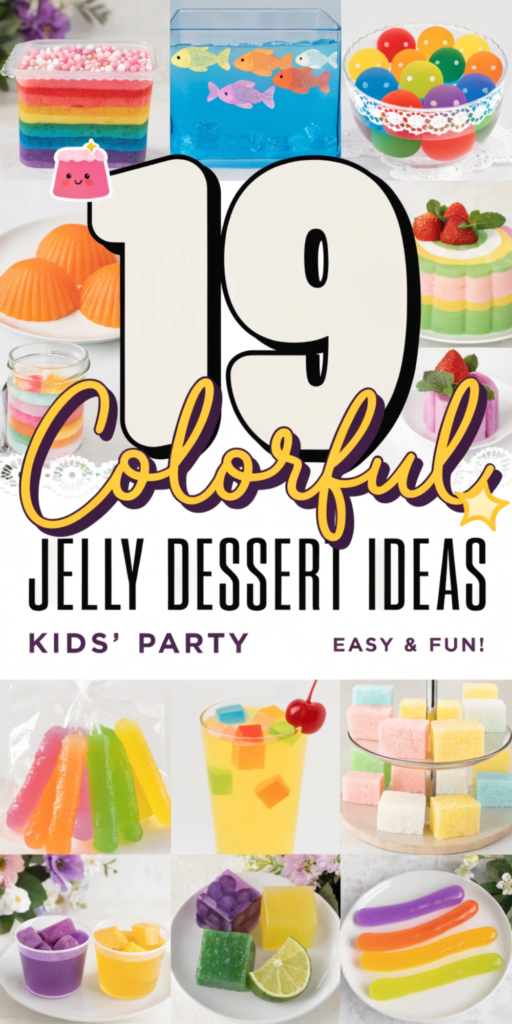
Jelly desserts have been the cornerstone of children’s parties and family desserts for generations for these exact reasons, plus the practical one: they’re made in advance, they hold in the refrigerator for days, they’re portable, they’re cheap to make, and they require exactly zero skill to execute. The most complex jelly dessert on this list requires about twenty minutes of active effort and a willingness to wait several hours for things to set.
These 19 ideas range from the simplest cups a child can make alongside you to the layered, colorful, spectacular creations that become the centerpiece of a party table. All of them involve the fundamental joy of jelly. All of them are things children will eat enthusiastically and ask for again. That combination has never gone out of fashion and shows no signs of doing so.
1. Classic Jelly Cups in Fun Colors
The starting point. Individual jelly cups made in clear cups or small glasses so children can see the color and wobble factor clearly. Make several flavors in different colors, arrange them on a tray, and let children choose their own. This is the jelly dessert in its most honest, uncomplicated form.
What You’ll Need (makes 8 cups):
- 2 packets jelly powder in different flavors (strawberry, lime, orange, raspberry, blueberry, whatever your children prefer)
- Boiling water and cold water as per packet instructions
- Clear plastic cups or small glasses
- Optional toppings: whipped cream, sprinkles, a single gummy bear on top
How to Make It:
Make each flavor of jelly according to the packet directions. Pour each into individual cups, filling about three-quarters full. Refrigerate for at least 4 hours until completely set.
Serve with a small spoon and optional toppings in small bowls alongside so children can decorate their own cups.
The clear cup is important. The visual is part of the experience. A jelly cup in a clear glass is approximately twice as exciting as the same jelly cup in an opaque container. This is a documented fact of childhood.
2. Layered Rainbow Jelly
A layered jelly of five or six different colors, each set before the next is poured in, produces a cross-section that looks like a rainbow when cut. It is the most visually spectacular thing on this list and also the most patient: each layer needs two to three hours to set before the next goes on.
What You’ll Need (serves 12-16):
- 6 packets jelly in different colors: strawberry (red), raspberry (pink), orange, lemon (yellow), lime (green), blueberry or blackcurrant (blue/purple)
- Boiling water and cold water per packet instructions
- A deep, clear glass dish or individual clear cups
- Whipped cream for serving
How to Make It:
Start with the first color. Make according to packet instructions. Pour a 1/2-inch layer into the dish. Refrigerate until completely firm, about 2-3 hours. Repeat with each color.
The trick to clean layers: let each layer set until it is completely firm and will not move when you tilt the dish. When you pour the next warm layer on top, if the previous layer isn’t fully set, they blend. Let each one go cold and completely firm.
The full rainbow jelly requires about 12-18 hours from first layer to last, so this is a two-day project. Plan accordingly. The result is completely worth the patience.
When all layers are set, cut into squares or cubes. Each cube reveals all the colors. This is the moment that makes children genuinely delighted, which is the point of the whole enterprise.
3. Jelly Fish Tank
A jelly dessert that looks like an aquarium. Blue jelly in a clear container with gummy fish and sea creatures suspended inside at different depths, crushed graham crackers as sand at the bottom. The creation is half dessert, half art project, and children will ask to make it with you rather than just receive it.
What You’ll Need (serves 6-8):
- 2 packets blue-raspberry or blue jelly powder
- Assorted gummy sea creatures: sharks, fish, worms (for eels), octopuses
- Crushed graham crackers for the sand
- A clear rectangular or square container
- Green fruit leather cut into strips for seaweed (optional)
How to Make It:
Spread crushed graham crackers across the bottom of the container to form the “sand.”
Make the blue jelly according to packet instructions but let it cool until it’s barely warm, almost room temperature, before pouring, so it doesn’t dissolve or move the creatures when poured.
Pour a 1/2-inch layer of jelly over the sand. Place some gummy fish and sea creatures on top of this layer. Add the green fruit leather strips. Refrigerate until set, about 1 hour.
Add another layer of jelly. Place more sea creatures at different depths. Refrigerate until set. Repeat until you’ve used all the jelly and the tank looks full and three-dimensional.
Refrigerate until completely firm before serving.
4. Jelly in Orange Shells
The orange peel cups. Each orange is halved, the flesh is scooped out to eat or juice, and the shell is filled with orange jelly. When set, they’re cut in half again to produce orange-slice-shaped jelly pieces that are served on a tray. They look entirely handmade and professional and cost nothing.
What You’ll Need (makes 16-20 jelly slices):
- 8-10 large oranges, halved
- 2 packets orange jelly powder
- Boiling water and cold water per packet
- The juice squeezed from the orange flesh, strained, to replace some of the cold water for extra flavor
How to Make It:
Halve the oranges. Squeeze and reserve the juice. Scoop out any remaining flesh carefully, leaving the peel shells intact.
Make the jelly according to packet instructions, using the strained orange juice in place of some or all of the cold water. The fresh juice intensifies the flavor significantly.
Place the orange shells in a muffin tin to hold them steady and level. Pour the warm jelly into each shell, filling completely. Refrigerate overnight until completely firm.
Using a sharp knife, cut each filled orange half into two wedge-shaped slices. Arrange on a platter. The orange rind and the jelly look like a fresh orange slice, which is the visual trick that makes this one of the most impressive of all the jelly presentations.
5. Jelly and Cream Parfaits
Jelly layered with whipped cream or yogurt in individual cups creates a more substantial, visually striped dessert that bridges the gap between a simple jelly cup and something that feels like a proper dessert. The cream softens the sweetness of the jelly and the combination of textures makes each spoonful more interesting.
What You’ll Need (makes 8 parfaits):
- 2 packets jelly in contrasting colors (strawberry and cream/vanilla is the classic combination; raspberry and mango is equally good)
- 1 cup heavy whipping cream, whipped with 2 tablespoons powdered sugar and 1/2 teaspoon vanilla
- Or: 1 cup plain vanilla yogurt as a lighter option
- Optional: fresh berries between layers, sprinkles on top
How to Make It:
Make each jelly and let set completely in separate shallow dishes. Cube or break the set jelly into pieces.
Layer in parfait glasses or clear cups: jelly, cream or yogurt, jelly, cream or yogurt, finishing with cream on top and a sprinkle of color.
The layering system is the same as for the rainbow jelly but faster since you’re alternating jelly and cream rather than waiting for multiple colors to set. Can be made the morning of a party and held in the refrigerator.
6. Jelly Worms
This one requires silicone straw molds or actual plastic straws and a small amount of patience. Jelly poured into straws and set, then pushed out, produces worm-shaped jelly that is simultaneously revolting-looking and completely delicious. Children consider this the best thing that has ever happened at a dessert table. They are not entirely wrong.
What You’ll Need (makes 40-50 worms):
- 2 packets jelly (choose colors: red, green, or orange for the most convincing worm appearance)
- 1/2 cup heavy cream mixed into the hot jelly for a creamy, more opaque worm effect (optional)
- Plastic straws or silicone straw molds
- A glass or jar to hold the straws upright
How to Make It:
Make the jelly according to packet instructions. Let it cool to barely warm, about 15-20 minutes.
Place the straws in a tall glass or mug so they stand upright. Use a turkey baster, squeeze bottle, or small pitcher to pour the jelly into each straw, filling them completely. Refrigerate overnight.
When ready to serve: hold each straw over a plate and push the jelly worm out by pressing firmly from the bottom with your thumb. They will slide out. If they resist, run warm water briefly over the outside of the straw.
Serve on a plate dusted with crushed graham crackers or Oreo crumbs as “dirt.” Children will pick them up and eat them directly with their fingers. This is correct behavior for jelly worms.
7. Frozen Jelly Popsicles
Jelly mixed with a small amount of fruit juice, poured into popsicle molds and frozen, produces popsicles that have a unique texture different from regular ice pops: slightly firmer, with a subtle bounce from the gelatin, and a concentrated flavor. They’re also significantly harder to melt quickly than standard ice pops, which matters at summer parties.
What You’ll Need (makes 12 popsicles):
- 2 packets jelly in any flavor
- 1 cup boiling water (instead of the 2 cups usually specified)
- 1 cup cold fruit juice (matching flavor: apple, orange, or mixed berry)
- Popsicle molds and sticks
- Optional: small fruit pieces suspended inside each mold
How to Make It:
Dissolve the jelly powder in 1 cup of boiling water. Stir for 2 minutes until fully dissolved. Add 1 cup of cold juice.
Let cool to room temperature. Pour into popsicle molds, leaving a small gap at the top. Add small fruit pieces if using. Insert sticks.
Freeze for at least 6 hours.
To unmold: run warm water over the outside of the mold for 10 seconds and pull gently.
8. Jelly Jigglers (Finger Jelly)
The classic firm, cut-out jelly. Finger jelly is made with double the gelatin, which produces a jelly firm enough to cut with cookie cutters, hold its shape when picked up, and be eaten without a spoon. Children eat them directly from the tray, which is the intended experience.
What You’ll Need (makes 40-50 shapes):
- 2 packets jelly in any flavor
- 1 cup boiling water only (no cold water, the reduced liquid creates a firmer set)
- Cookie cutters in shapes children will respond to: stars, hearts, dinosaurs, animals, letters
- Optional: make two contrasting colors and cut shapes from each, then swap centers (a red heart cut-out placed in a yellow jelly, and vice versa)
How to Make It:
Dissolve both jelly packets in 1 cup of boiling water only. Stir for 2 minutes until completely dissolved. Pour into a shallow, flat pan (a 9×13-inch pan works well) to about 1/2-inch depth.
Refrigerate for at least 4 hours until very firm.
Press cookie cutters firmly through the jelly and lift out the shapes. Arrange on a tray.
The firm texture means these can be picked up with fingers without falling apart. Serve on a platter and watch them disappear in under ten minutes.
9. Jelly Boats in Lemon Halves
The same technique as the orange shells, applied to lemons and filled with yellow or lime jelly. The lemon halves are small enough to produce single-serving boat-shaped vessels that are served as-is rather than cut further. They look adorable on a party table, which is a genuine consideration when you’re trying to get twenty children excited about a dessert.
What You’ll Need (makes 16 boats):
- 8 large lemons, halved
- 2 packets lemon or lime jelly powder
- Boiling water and cold water per packet
How to Make It:
Halve the lemons. Juice them and reserve the juice for another use. Scoop out the remaining pulp from each half, keeping the shells intact.
Make the jelly with the packet instructions. Let cool slightly. Place the lemon shells in a muffin tin to stabilize. Fill each shell to the brim with jelly.
Refrigerate overnight until completely set. Serve as is, with a small spoon.
The lemon shell contains a slight bitterness from the white pith that contrasts interestingly with the sweet jelly. Children usually eat the jelly and leave the shell, which is fine. Some children eat the shell too. Also fine.
10. Jelly and Fruit Cups
The approach of setting jelly around fresh or canned fruit is simultaneously one of the oldest jelly techniques and one of the most pleasing: the fruit suspended in the set jelly, visible through the clear gel, with different colors and textures creating something that looks like a jewel box. Use clear cups to show off the effect.
What You’ll Need (makes 10 cups):
- 2 packets jelly in any flavor
- 1 cup mixed fruit: fresh strawberries, mandarin segments, grapes halved, kiwi chunks, raspberries
- Clear cups or glasses
How to Make It:
Make the jelly according to packet instructions. Let it cool to barely warm, about 20-25 minutes. If you add fruit to hot jelly, fresh fruit floats and canned fruit sinks. Slightly cooled jelly suspends fruit more evenly.
Divide the fruit among the cups. Pour the barely-warm jelly over the fruit in each cup. Refrigerate for at least 4 hours until completely set.
The fruit is visible through the walls of the clear cup, which is a significant part of the presentation. Use multiple colors of fruit for maximum visual effect.
11. Jelly Cheesecake (No-Bake)
A no-bake cheesecake topped with a jelly layer that sets glossy and bright over the creamy filling. The contrast between the creamy white cheesecake and the vivid jelly layer is visually striking and the combination of flavors is one of the most universally liked of all the jelly dessert variations.
What You’ll Need (serves 12):
For the Base:
- 2 cups crushed graham crackers or digestive biscuits
- 1/3 cup melted butter
- 2 tablespoons sugar
For the Filling:
- 16 oz cream cheese, softened
- 1 cup powdered sugar
- 1 teaspoon vanilla extract
- 1 cup heavy cream, whipped to stiff peaks
For the Jelly Topping:
- 1 packet strawberry, raspberry, or any bright-colored jelly
- 1/2 cup boiling water, 1/4 cup cold water (half the usual recipe for a very firm, concentrated topping layer)
How to Make It:
Mix the base ingredients and press into a 9-inch springform pan. Refrigerate for 30 minutes.
Beat cream cheese, powdered sugar, and vanilla until smooth. Fold in the whipped cream. Spread over the chilled base. Refrigerate for 2 hours until set.
Make the jelly with half the usual water quantities. Let cool to room temperature. Pour very gently over the set cheesecake filling.
Refrigerate for at least 3 hours until the jelly is completely firm. Release the springform. The layers should be distinct and clean.
12. Traffic Light Jelly
Red, yellow, and green jelly in layers in a cylindrical or rectangular container, producing a cross-section that looks exactly like a traffic light. This is the themed jelly that children between ages three and seven find almost incomprehensibly exciting. It’s three colors. It’s a traffic light. Dessert and transportation, combined.
What You’ll Need (makes 8-10 servings):
- 1 packet strawberry jelly (red)
- 1 packet lemon jelly (yellow)
- 1 packet lime jelly (green)
- Clear cylindrical cups or a rectangular glass dish
How to Make It:
Make the red jelly first. Pour into the base of each cup or into the bottom third of the dish. Refrigerate until completely firm, at least 2-3 hours.
Make the yellow jelly. Let it cool to barely warm. Pour gently over the set red layer. Refrigerate until completely firm.
Make the green jelly. Repeat the process for the top layer.
The key to clean, distinct layers is patience: each layer must be completely firm before the next is added, and the new layer must be cool enough not to re-melt the previous one.
Serve in the cups or cut into cross-sections from the dish to reveal the three-color traffic light effect.
13. Coconut Panna Cotta with Jelly Top
A coconut panna cotta, which is a softly set cream dessert, topped with a mango or passionfruit jelly layer. The panna cotta is creamy and white, the jelly is vivid and translucent, and the two together in a small glass look sophisticated while being exactly as simple to make as any other jelly dessert.
What You’ll Need (makes 10 small glasses):
For the Panna Cotta:
- 2 cups coconut cream
- 1 cup whole milk
- 1/4 cup sugar
- 1 teaspoon vanilla
- 2.5 teaspoons gelatin powder, bloomed in 3 tablespoons cold water
For the Jelly Top:
- 1 packet mango or passionfruit jelly
- Half the usual water quantities for a firm layer
How to Make It:
Warm the coconut cream, milk, and sugar in a saucepan until the sugar dissolves. Remove from heat. Melt the bloomed gelatin into the warm mixture. Add vanilla. Cool slightly.
Pour into small glasses to fill halfway. Refrigerate for 3 hours until set.
Make the jelly with half quantities. Let it cool to room temperature. Pour a thin layer over each set panna cotta. Refrigerate for 2 more hours.
The two layers will be visually distinct and the combination of textures makes this feel notably more grown-up than a standard jelly cup, while still being entirely beloved by children.
14. Broken Glass Jelly Cake
Multiple flavors of jelly made separately, set, cut into cubes, and then suspended in a white panna cotta or cream jelly, creating the appearance of colored glass shards suspended in white. It looks complex and requires nothing more than patience and a large bowl.
What You’ll Need (serves 16-20):
- 4 packets jelly in different bright colors: red, orange, yellow, green
- For the white layer: 1 can (14 oz) sweetened condensed milk, 2 cups boiling water, 2 packets unflavored gelatin
- A large clear bowl for assembling
How to Make It:
Make each colored jelly separately in shallow dishes. Refrigerate until firm. Cut into 1/2-inch cubes.
Make the white layer: dissolve the unflavored gelatin in 2 cups boiling water. Stir in the condensed milk. Cool to room temperature.
Combine all the colored jelly cubes in the large bowl. Pour the slightly cooled white mixture over the top. Gently stir to distribute the colored cubes throughout. Do not stir too vigorously or the cubes will break.
Refrigerate for at least 4 hours until the white layer is completely set.
Cut into squares. The cross-section reveals colorful cubes suspended in white, which is exactly as visually extraordinary as it sounds.
15. Jelly Domes with Surprise Centers
Jelly set in dome-shaped molds (rounded bowls or silicone hemisphere molds) with a small sweet hidden inside the center: a gummy bear, a piece of fruit, a chocolate truffle. The child unmolds the dome onto their plate, and the surprise at the center is revealed. The hidden element is the entire game here.
What You’ll Need (makes 8 domes):
- 2 packets jelly in any clear, vibrant color
- 8 small sweets or surprises: gummy bears, small marshmallows, strawberry pieces, or similar
- Dome-shaped silicone molds or small rounded bowls
How to Make It:
Make the jelly and let it cool to barely warm. Fill each mold to the halfway point. Refrigerate for 1 hour until partially set (firm enough to hold a sweet without it sinking to the bottom).
Place the sweet in the center of each half-set dome. Fill the rest of the mold with jelly. Refrigerate for at least 4 hours until completely firm.
To unmold: place a plate over the top of the mold and flip confidently. The dome should drop cleanly onto the plate.
The visual of a perfect jelly dome with something visible at the center is extraordinary. The act of unmolding it is, for children, as exciting as the eating.
16. Jelly Slice (No-Bake)
The Australian jelly slice is a three-layer no-bake dessert: a condensed milk biscuit base, a cream cheese middle, and a jelly top. It is simultaneously the most retro and the most reliably crowd-pleasing of all the jelly desserts for children, and it produces clean, neat slices that are easy to serve at parties.
What You’ll Need (serves 16-20):
For the Base:
- 250g plain sweet biscuits (digestives or graham crackers), crushed
- 125g butter, melted
- 1/2 can (200g) sweetened condensed milk
For the Middle:
- 250g cream cheese, softened
- 1/2 can sweetened condensed milk
- 1 tablespoon lemon juice
For the Jelly Top:
- 2 packets jelly (strawberry is traditional)
- Made with half the usual water for a firm set
How to Make It:
Mix the crushed biscuits with melted butter and condensed milk. Press firmly into the base of a lined 9×13-inch pan. Refrigerate for 30 minutes.
Beat the cream cheese with condensed milk and lemon juice until smooth. Spread over the chilled base. Refrigerate for 1 hour.
Make the jelly at half strength. Cool to room temperature. Pour over the cream cheese layer. Refrigerate overnight.
Cut into small rectangles with a sharp knife. The three layers should be distinct and clean.
17. Dinosaur Jelly Eggs
Jelly set inside egg-shaped molds (or real washed eggs with a small hole at the top) in earthy, prehistoric colors: amber, green, dark red. A small dinosaur figurine served alongside each “egg” completes the theme. This is the party dessert that extends into imaginative play.
What You’ll Need (makes 12 eggs):
- 2 packets jelly in earthy or dramatic colors: orange, dark cherry, lime
- Egg-shaped silicone molds or cleaned, intact eggshells (with a small opening cut in the top)
- Small plastic dinosaur figurines, one per child
How to Make It:
Make the jelly. Pour into the egg molds. Refrigerate until completely set.
To serve: unmold each jelly egg onto a plate. Place a small dinosaur figurine next to each one. The dinosaur “hatched” from the egg. This narrative is provided at serving time.
Children who have shown zero interest in dessert will eat the jelly egg on the grounds that it arrived with a dinosaur.
18. Strawberry Jelly Mousse Cups
A lighter, airier version of jelly created by folding set jelly into whipped cream, producing a mousse-like texture that is neither firm jelly nor plain cream but something between the two. Pink, sweet, and spoonable, it’s the jelly dessert for children who find the firm texture of standard jelly too intense.
What You’ll Need (makes 8 cups):
- 2 packets strawberry jelly
- 1 cup boiling water (half the usual)
- 1 cup cold water
- 1 cup heavy whipping cream
- 2 tablespoons powdered sugar
- Fresh strawberries for topping
How to Make It:
Make the jelly with 1 cup boiling water and 1 cup cold water. Refrigerate until it is the consistency of egg whites: partially set but still liquid and wobbly, about 1-2 hours.
Whip the cream with the powdered sugar to medium peaks.
Beat the partially set jelly until fluffy and pale. Fold in the whipped cream gently until combined.
Divide among cups and refrigerate for at least 3 hours until fully set.
Top with fresh strawberries before serving.
The result is a lighter, creamier, airier texture than standard jelly that many children prefer and that adults find surprisingly delicious.
19. Giant Jelly Mold
The showstopper. A large decorative jelly mold, the kind with ridges and layers and a shape that makes people ask how you did it, filled with a bright, vibrant jelly and unmolded onto a platter. It wobbles when you carry it to the table. This is the jelly dessert that produces applause.
What You’ll Need (serves 16-20):
- 4 packets jelly in one or two complementary colors (a single bold color works best for maximum visual impact in a shaped mold)
- A decorative bundt pan, ring mold, or large jelly mold
- Fresh fruit to fill inside the mold
- Whipped cream for serving
How to Make It:
Make all four packets of jelly in one large batch, following packet instructions. Let cool to room temperature. Add any fresh fruit to the mixture. Pour carefully into the well-oiled mold.
Refrigerate overnight until completely and firmly set. This is important: a large mold needs more time than individual cups.
To unmold: briefly run warm water over the outside of the mold for 15-20 seconds. Place a serving platter over the top, press firmly, and invert confidently in one motion. If it doesn’t release, run more warm water and try again.
Carry to the table. Watch it wobble. Receive the applause. Serve with whipped cream and a dessert spoon.
A properly set jelly in a beautiful mold is a genuinely spectacular thing. There is a reason it appears at the center of every celebration table, year after year, generation after generation. It wobbles. It shines. It is exactly as delightful as it looks.